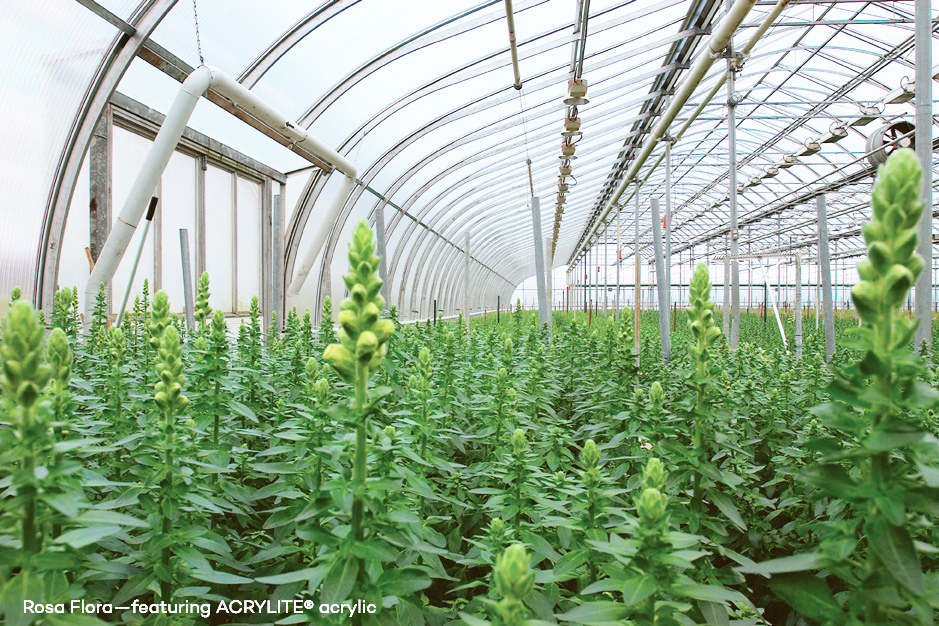
In greenhouse design, structure matters—but glazing decisions may matter even more. Glazing isn’t just for enclosure; it directly affects light quality, thermal efficiency, crop health, and profitability.
More Than Glazing: Its Role in Greenhouse Strategy
“Choosing the right glazing material is one of the most critical decisions a grower will make,” says David Morrison, Technical Service Engineer at POLYVANTIS. “It directly affects the greenhouse’s operational costs and how well crops perform season after season.”
A successful greenhouse starts with understanding your crop’s light requirements or Daily Light Integral (DLI)—the total amount of photosynthetically active radiation (PAR) needed daily. This helps growers shape a lighting strategy that supports year-round production.
Natural light varies by region and season. Supplemental lighting is often required in northern climates or in winter. Efficient glazing maximizes natural light and minimizes energy use. The better it transmits and insulates, the less you need to supplement or heat.
ACRYLITE® multi-wall acrylic is designed to optimize this balance. It transmits up to 89% of PAR while diffusing light to reduce hot spots and encourage even canopy growth.
Glazing and Energy Use: A Long-Term Investment
While initial cost matters, long-term modeling tools like the USDA-funded LAMP Project help assess how glazing affects energy usage. ACRYLITE® multi-wall acrylic can deliver up to 20% more usable light than traditional double-layer covers, cutting supplemental lighting needs and energy bills.
Built to Last, Backed by Science
ACRYLITE® multi-wall acrylic resists yellowing and degradation, maintaining clarity and performance for decades, with warranties and proven results to back it up.
Partnering for Performance
Morrison advises working with experienced designers and suppliers. “The right glazing supports today’s needs and tomorrow’s goals.”
Focusing on light, insulation, and durability can help growers boost yields, lower energy costs, and strengthen long-term success.
For more information, visit Our Greenhouse Resource Hub